
Issue 14 | December 17, 2024
IN THIS ISSUE
FEATURED ARTICLE
Impostor Syndrome and Perfectionism
THIS WEEK’S REFRAME
WHAT’S NEW AT IMPOSTOR SYNDROME INSTITUTE
A Year of Expansion
FEATURED RESOURCE

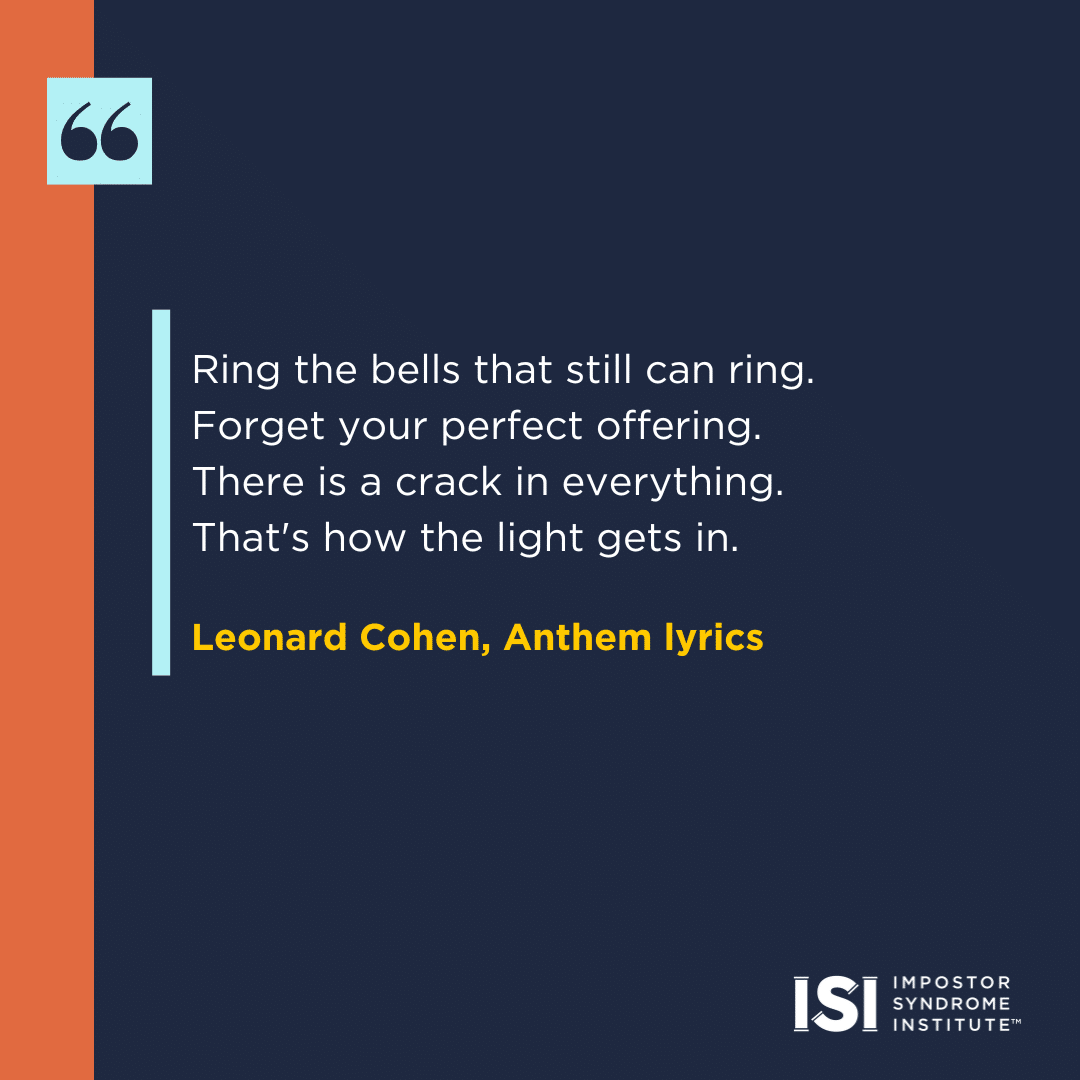
Perfectionism has nothing to do with getting it right. It has nothing to do with having high standards. Perfectionism is a refusal to let yourself move ahead.
— Jennifer White
Impostor Syndrome and Perfectionism

There are many potential sources of impostor syndrome.
Family messages and expectations, situational factors like being a student, being in a group for whom there are societal stereotypes regarding competence and intelligence, and aspects of organizational culture both related and unrelated to bias.
However, everyone with impostor syndrome shares one thing in common.
Given this article’s title, you might expect that one thing to be perfectionism.
You’d be close.
More broadly, though, the one thing everyone who experiences impostor syndrome shares is an unrealistic, unsustainable internal rulebook about what it means to be competent.
Not surprisingly, studies have shown a strong connection between the impostor phenomenon and perfectionism.
Before looking at this link, it’s important to note that not everyone who experiences impostor syndrome identifies as a perfectionist.
In 2001, I discovered what became known as the five types of impostor syndrome.
These types represent five potential ways people with impostor feelings measure their competence.
In addition to the Perfectionist, there is the Expert, the Natural Genius, the Soloist, and the Superhuman.
Meet the Perfectionist


2024 was another year of expansion for Impostor Syndrome Institute!
We welcomed coaches and speakers from twelve (12) more countries — bringing our reach to 23 countries.
Ninety (90) coaches from 19 countries have now completed our ICF-accredited Impostor Syndrome-Informed Coaches™ (ISIC) training.
And to make our coach training more accessible to even more people, we’re gearing up to roll out ISIC as an on-demand program in early 2025!
Plus since our first cohort in 2021, we’ve now trained over 50 Rethinking Impostor Syndrome™ (RIS) Licensed Speakers with a new cohort starting soon.
With the addition of associates from Turkey, Mexico, and France in 2024 came the translation of RIS into Turkish and French (already available in Spanish and English.)
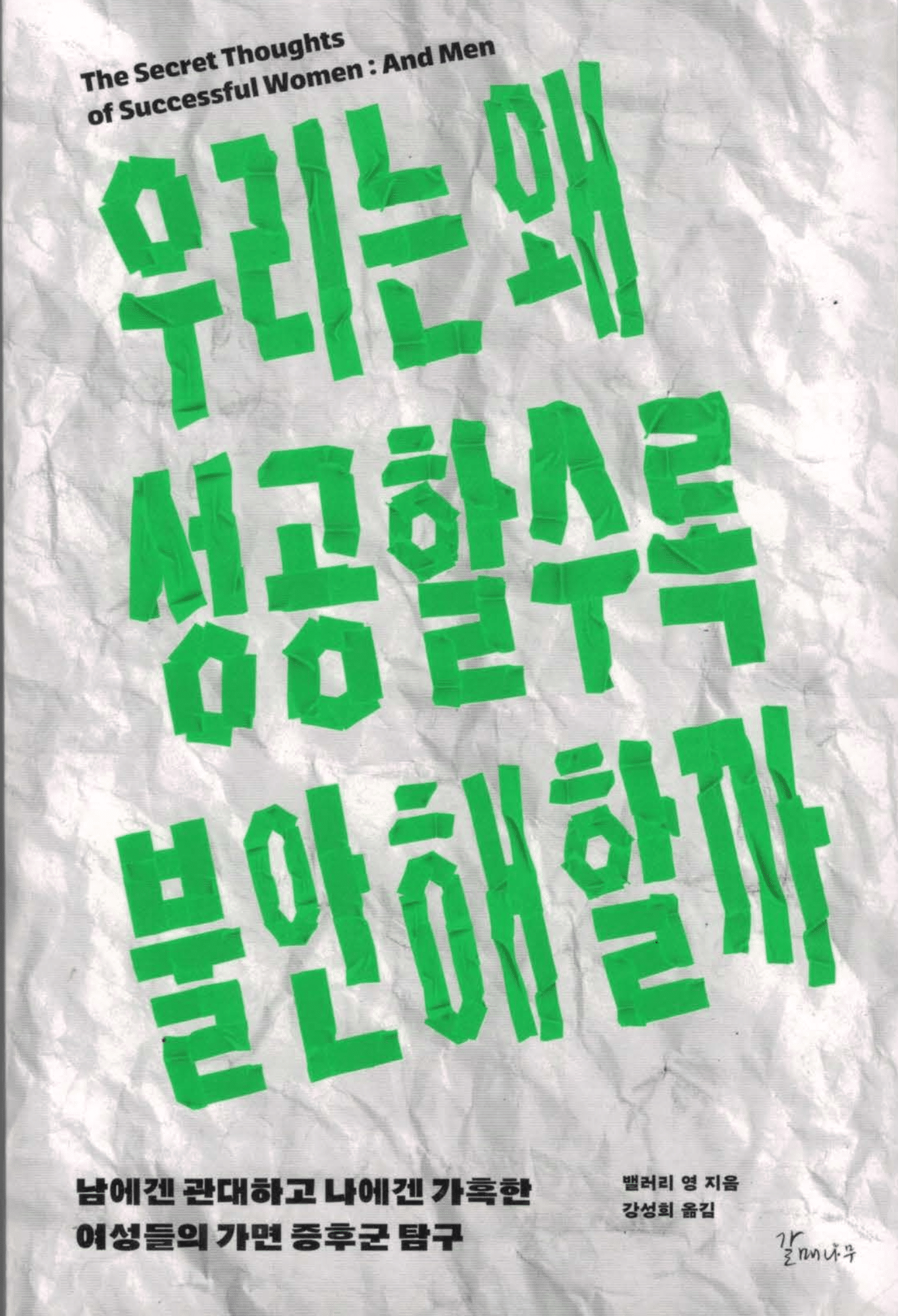
Speaking of translation — Dr. Young signed deals to make The Secret Thoughts of Successful Women: And Men, Why Capable People Suffer from Impostor Syndrome and How to Thrive in Spite of It available in Turkish and Ukrainian in 2025.
And the updated 2024 version of Valerie’s book was just reissued in Korean!
Finally, we delivered Rethinking Impostor Syndrome™ to thousands of people in a wide range of fields, occupations, and organizational levels including:
Aspirant
Bridgepoint Consulting
Healthcare Distribution Alliance
Institute of Nuclear Power Operations
Johnson & Johnson
Kaufman Hall & Associates
MIT (6th time!)
Net At Work
New York Genome Association
One Mind (law firms)
RaceTrac
Siemens Energy
Sun Life
Texas A&M, Corpus Christie
University of Massachusetts, Amherst School of Business faculty
University of Massachusetts, Amherst School of Business staff
University of Massachusetts, Amherst School of Business PhD students
US Geological Survey
Vizient
Women’s Food Forum conference
We hope you had a wonderful year as well!


Parents often tell us of their kids who, at a very young age, are already showing signs of perfectionism.
Fortunately, there are a number of good books on perfectionism specifically for children.
- For younger kids, The Girl Who Never Made Mistakes, by Mark Pett and Gary Rubinstein
- The Thing Lou Couldn’t Do by Ashley Spires which features black characters
- For pre-teens and teens, What to Do When Good Enough Isn’t Enough, Thomas Greenspon
The key is to teach children to see to be what we refer to as Humble Realists™.
In other words, to value in learning from mistakes, failure, and constructive feedback, to focus on effort over intelligence, and to try new things regardless of the outcome.
As an added benefit, when we help our children reinforce Humble Realist™ thinking we reinforce it in ourselves as well!
Do these insights resonate with you? What else should we be writing about now? Tell us by emailing [email protected].
Was this newsletter forwarded to you? Subscribe below:
