Issue 22 | March 2, 2026
IN THIS ISSUE
PERSONAL FROM VALERIE
From the heart…with pics!
FEATURED ARTICLE
Impostor Syndrome and the Dark Triad
FEATURED RESOURCE
Researchers find link between supervisor behavior and impostor syndrome
NEW HUMBLE REALIST™ REFRAME
FIND AN IMPOSTOR SYNDROME-INFORMED COACH
New Coach Directory and coaches
ICF-ACCREDITED COACH TRAINING
RECENT WORKSHOPS & PRESENTATIONS

The last of the human freedoms is to choose one’s attitudes.
— Victor Frankel
Yes, there is a lot on my plate right now (details to follow!).
For starters, tripped and broke my hand, wrist, and two fingers.
The bad news: It’s my right hand. That makes typing and most things, including driving, difficult, if not impossible.
The good news: It could have been far worse!
Before my accident, I was taking more time to smell the roses.
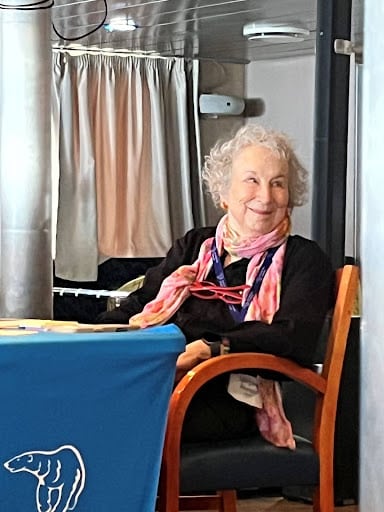
There are no roses in Greenland or the far northern wilds of Labrador’s Torngat Mountain range.
But, as I learned from an extended excursion, there is amazing scenery.



Including guest speaker Aleqa Hammond (first row), the first and only female prime minister of Greenland.


Impostor Syndrome and the Dark Triad

Presumably, this news is intended to reassure those of us who’ve experienced the “I’m in over my head, and they’re going to find out” feeling, popularly known as impostor syndrome.
There’s just one problem.
The claim that only a “real impostor” would never feel like one is based on neither evidence nor a deep understanding of impostor syndrome.
But that hasn’t stopped an increasing number of prominent and otherwise insightful people from asserting this – and worse.
Among them is clinical psychologist and executive and couples coach Robin Buckley.

Resources for a Change
Researchers in Tunisia have found that supervisor empathy can decrease impostor syndrome in doctoral students.
Among the conclusions:
“As a company’s reputation contributes to its sustainable competitive advantage, supervisors’ levels of empathy emerge as a critical element in managing impostor syndrome.”
“The supervisor having the skills to emotionally understand how students feel and see things becomes a precursor and inducer of the intellectual skills needed to conduct doctoral research.
In interacting with young people, for example, active listening creates a safe and stimulating environment, encouraging them to freely express their logical thinking and scientific imagination.”
Yet another reason for organizations to address impostor syndrome in tandem with efforts to promote psychological safety.
Other notable findings:
- Female doctoral students experienced significantly higher levels of impostor syndrome
- Doctoral students who are married, divorced, or have children exhibit higher levels of impostor syndrome than single students, regardless of gender
- Doctoral students who are employed experience a more pronounced impostor syndrome than those who are not employed, regardless of gender
Unless they have children, I don’t have a good analysis for why impostor syndrome is higher in divorced or married students. Indeed, in another study, rates were lower for married medical students.
It’s possible that juggling school and work and/or parenting contributes to feelings of overwhelm, which can cause you to doubt your ability to perform.
Plus, multiple responsibilities mean you have more arenas in which to feel inadequate.

“There is no “end” to knowledge. When you try to know everything, it’s like trying to get to the end of the Internet. It’s simply not possible. The quest for ultimate knowledge is futile. Instead, relax and just do the best you can”
– Valerie Young


Instead of the proverbial question, “What would you do if money were no object,” ask, “What difference could I make if impostor syndrome were not a factor?”
Impostor syndrome impacts retention, productivity, innovation, advancement, and health and wellness.
Help yourself or your employees go further, faster with a certified Impostor Syndrome Informed Coach™.
Coaching available in Spanish, French, Italian, German, Russian, Turkish, Bulgarian, Dutch, and American Sign Language.
Visit our frequently UPDATED Coach Directory to find the right Impostor Syndrome-Informed Coach for you.

This evidence-based, immediately accessible coach training is grounded in the thought leadership of Dr. Valerie Young.
Gain credibility and confidence with an evidence-based approach and a complete set of ready-to-use coaching tools. Trusted by coaches in 22+ countries.

Impostor syndrome is a global phenomenon that is costly to individuals and organizations.
Here are just a few of the recent presentations and workshops delivered by Dr. Valerie Young and our international team of Licensed Rethinking Impostor Syndrome™ presenters:
- American Council on Education’s Women’s Network, New York State Chapter (members)
- Siemens Energy (employees; repeat engagement)
- CJD Lille Métropole: Centre des Jeunes Dirigeants d’entreprise (entrepreneurs)
- Artefact (employees)
- Lactalis (employees)
- Samaritan House
- Willkie Farr & Gallagher, LLP (associates)
- Ombudsman Association (members)
- Association of Legal Administrators’ fall conference (Oregon chapter)
- Amherst College student leaders (repeat engagement)
- Dickinson College first-year student orientation
- Dickinson College faculty and administrator professional development
- DeRocco Women in Manufacturing Fellows
- Rollins College staff and administrator professional development
- University of Michigan Medical School (faculty)
- University of Copenhagen (graduate students, faculty; repeat engagement)
Click here to learn more about bringing a virtual or on-site Rethinking Impostor Syndrome™ program to your organization.

Follow and Engage With Us
Instagram: @impostorsyndrome
LinkedIn: ImpostorsyndromeInstitute
LinkedIn: ValerieYoung
Facebook: DrValerieYoung
Was this newsletter forwarded to you? Subscribe below:
