
If you don’t feel like an impostor, that means you are one.
Presumably, this news is intended to reassure those of us who’ve experienced that “I’m in over my head and they’re going to find out” feeling popularly known as impostor syndrome.
There’s just one problem.
The claim that only a “real impostor” would never feel like one is based on neither evidence nor a deep understanding of impostor syndrome.
But that hasn’t stopped an increasing number of prominent and otherwise insightful people from asserting this – and worse.
Among them is clinical psychologist and executive and couples coach Robin Buckley.
In her article Real Imposters Don’t Experience Imposter Syndrome, Buckley offers three reasons why someone would not experience impostor syndrome.
- They “haven’t experienced success, so they have nothing to lose.”
- They “have a delusional perception of themselves, sometimes believing their own lies or twisted interpretations of reality, or
- They “are genuine con artists or narcissists.”
If numbers two and three make you want to cling to your impostor feelings, brace yourself because it gets worse.
In a popular YouTube video, behavioral social scientist and Harvard professor Arthur C. Brooks says there is only one group that doesn’t experience impostor syndrome.
And it consists of people who fall into what psychologists call the “dark triad.”
The dark triad describes individuals who are above average in three characteristics:
- narcissism, meaning “it’s all about me,”
- Machiavellianism, meaning a “willingness to do what it takes to get what I want, including hurting [others],” and
- psychopathic, meaning, “I’m going to hurt you and feel no remorse.”
Holy crap!
No wonder Brooks encourages viewers to “lean into” their impostor syndrome!
To be clear, I understand the inclination to rebrand impostor syndrome as net positive.
But putting a positive spin on impostor syndrome because it keeps us humble is like saying you should lean into depression because it keeps us in touch with our emotions.
I worry that instead of taking steps to unlearn impostor syndrome, the message is, “At least I’m not a psychopathic, narcissistic, out for myself, Machiavellian.
Even passive acceptance of impostor syndrome is problematic because it ignores the individual and organizational costs.
It can lead people to procrastinate or never finish the degree, the book, the painting…
It can lead people to overwork or overprepare, resulting in burnout.
It holds people back from starting or growing a business, pursuing promotions, or speaking up in meetings.
It impacts productivity, innovation, retention, advancement, and health and wellness.
At the same time, there are areas of agreement.
Brooks was right when he said that, whereas others see what they’re good at, people with impostor syndrome tend to focus on the knowledge or skills that they don’t have – or what psychologists refer to as “negativity bias.”
And yes, impostor feelings often (but not always) come up during times of learning and growth.
(Although I reject the notion that we need to feel inadequate to learn or grow.)
And Buckley was spot on when she said, “If you’re feeling imposter syndrome, it’s a strong sign that you aren’t one.”
People who experience impostor syndrome are not, in fact, “impostors.”
They are intelligent and capable. They just don’t always feel that way.
In fact, I’ve found that when pressed, deep down, even people with intense impostor syndrome know they can do just about anything they set their mind to.
At the same time, the advice to “lean into” our impostor feelings because they keep us humble is based on a false choice.
One that says…
You can either continue to feel like an impostor with the potential negative impact on advancement, retention, productivity, innovation, and health and wellness…
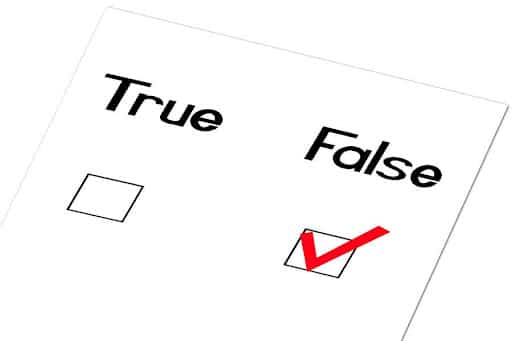
OR you can be an egocentric jerk.
Or, worse — an unsuccessful, delusional, ruthless, self-absorbed con artist, incapable of remorse.
To be sure, there are plenty of people who are the proverbial “smartest guy in the room.”
Especially in high places.
But if you’ve spent your adult life seeing yourself as undeserving of your success —even if your impostor feelings magically disappeared tomorrow — the odds of you becoming an arrogant jerk are pretty much zip.
More importantly, there is a third healthier choice.
The true opposite of impostor syndrome is neither incompetence nor arrogance.

It’s someone who is genuinely humble but has never experienced impostor syndrome.
Someone I refer to as a Humble Realist™.
Humble realists walk into a new situation and feel like “I’ve got this.”
Not out of arrogance.
But because they think differently in three ways:
1. They have a realistic understanding of competence, including acceptance of their human limitations.
2. They have a healthy response to failure, mistakes, setbacks, and constructive feedback, and
3. They recognize that a certain amount of fear and self-doubt is part of the achievement journey, especially during a learning curve.
Besides, impostor syndrome isn’t limited to strivers or other high achievers.
It impacts those who could go further were it not for nagging self-doubt.
That’s why for four decades, my message has remained the same:
Adjusting how you think about competence, failure, and success is the fastest path to unlearning impostor syndrome, bar none.
This approach is far more effective than painting anyone who’s never experienced impostor syndrome with a broad, negative brush.