
I’d just finished speaking at the University of British Columbia (UBC) when a doctoral student approached me and whispered, “I only believe half of what you said.”
The part he believed was that the hundreds of students sitting with him in the auditorium that day were, in fact, not impostors.
The part he didn’t believe was that he was one of them.
In other words, he believed he was the only “real” impostor.
As evidence, he told me he’d failed his qualifying exam to complete his doctorate at Oxford University.
I empathized with the disappointing outcome.
But I didn’t dwell on it.
Instead, I underscored one of the key lessons from my presentation:
Failing doesn’t make you an impostor. What matters is how you respond.
Knowing that many doctoral programs offer students a second shot, I did some quick “laser coaching.”
Was that the case at Oxford, and if so, did he try again?
If not, why not?
Either way, what did he learn from the experience that he can use in his new program?
I also told him about Mike Massimino.
When a NASA Astronaut on The Big Bang Theory Felt Like a Fraud
If his name is familiar, it’s because Mike played himself on the popular TV show, The Big Bang Theory, six times.
He also wrote an excellent book called Spaceman about his unlikely journey growing up working class and achieving his childhood dream of becoming a NASA astronaut.
It was there that I learned that before his first shuttle deployment, Mike suffered a major case of impostor syndrome.
He also recounted an epic failure while pursuing his master’s degree at MIT. “The first [aerospace] exam was brutal. When the test came back I got a 35, the lowest grade in the class.”
Mike thought he was “toast.”
But instead of dropping out, he formed a study group with two other failing students, and together they raised their grades.
A few years later, he took his oral qualifying exam for the PhD — just like the student at UBC.
If you’re not familiar with the process, Mike described it this way:
“An oral exam is like a firing squad. It’s their job to tear you apart, challenge your assumptions, force you to defend your conclusions. If they find a weakness in your work, they’ll hone in on it and take you down.”
The result: “They destroyed me. It was a massacre.”
Not only did Mike fail, but this committee chair and mentor all but said, “Maybe you’re not cut out for this.”
Demoralized Mike and considered abandoning his dream of becoming an astronaut..
Instead, he got busy.
In addition to doing further research, Mike again reached out to peers who helped him practice handling the intense pressure of a group of MIT professors grilling him on his proposed research.
This time he passed.
I told this young student about Mike Massimino because I wanted him to understand that we all have failures and setbacks.
It’s what we do with them that counts.
Why Setbacks Don’t Make You an Impostor — They Make You Human
I Know Because *I* Got Rejected By Mike
Shortly after reading Mike’s book, I had the chance to follow this advice to persevere despite setbacks – or in my case, rejection.
After retiring from NASA, Mike joined the engineering faculty at Columbia University.

Luckily for me, I was speaking to Columbia graduate students on the one day a week Mike held office hours.
So, I emailed to say I’d love to meet.
He didn’t reply.
There was a time when I would have assumed Mike was too important, too busy, or just plain uninterested in meeting me.
Instead, I chose to believe that emails are easy to miss.
Figuring it’s harder to miss a package, I mailed a copy of my book with a note asking to meet. It worked!
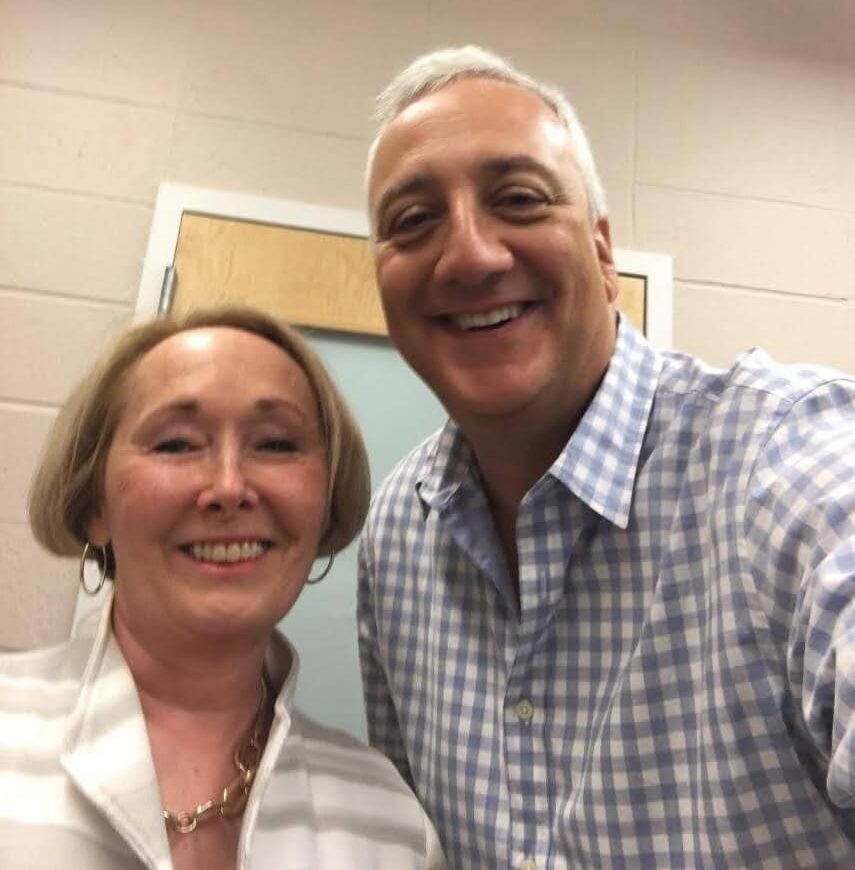
My favorite part of our conversation was when I said:
“Mike, from everything in your book, I don’t think you had impostor syndrome.”
“You don’t?” he said.
“No, I think what you were experiencing is a case of, ‘Holy crap I’m going into outer space in a tin can” syndrome.”
(I wasn’t sure how that joke would go over when I later shared it with an audience at NASA… but fortunately, they were good sports.)
The reason I don’t think Mike had impostor syndrome is because his academic setbacks were just two of many stories about failing, trying again and again, before ultimately achieving his lifelong dream of being an astronaut.
Indeed, Mike’s entire student and professional career is a brilliant case study in what I call Humble Realist™ thinking.
This includes a realistic understanding of competence that respects the humanness of our limitations and the inevitability of failure.
A healthy way of thinking about competence, captured by Mike in this PBS interview:
“It’s not a question of being the best at something or things coming easy to you, but it’s being a person that can work with others and not give up. And, for me, that was part of it too.
At every step of the way, when I had trouble, there were people that came in, in my life that helped me. It’s important to go seek help when you need it, and to give help when other people need it. And that is really more important than coming in with a gigantic brain into the astronaut program.”
The Real Cure for Impostor Syndrome? Think Like a Humble Realist™
The only way to stop feeling like an impostor is to stop thinking like an impostor.
The student I met at the University of BC can’t change what happened at Oxford.
What he can change is his response.
Just as the losing sports team watches the game tape for information to help them win next time, the student can use the lessons learned from failing his oral exam at Oxford.
When we focus on what our failures teach us, they automatically become less about us and what happened in the past, and more about growth and moving forward.